Read the Blog

Should I Undertake Schema Therapy Training? Considerations for Curious Therapists
Schema therapy is the heart and soul of my clinical and supervision practice. I’ve known schema therapy since my post-graduate trainings, where we had a copy of Reinventing Your Life in the student training clinic. Schema Therapy: A Practitioner’s Guide was one of my first big book purchases post-graduation and is the only book from that time I still refer to. The rest were donated many years ago.
Over the years, I moved beyond applying schema therapy or its principles with clients some of the time to delving deeply into it, achieving Advanced Certification as a therapist, and later completing my Supervisor Certification with the International Schema Therapy Society (ISST). During this time, I wrote an extensive collection of schema therapy blogs written in simple language that help clients and therapists understand and apply schema therapy. I’ve also developed a number of trainings to support therapists to apply schema therapy with ease.
This year, I’ve had the pleasure of supporting clinical psychology trainees begin their journey with schema therapy in my part-time role as Lecturer/Clinical Supervisor. For some, the model feels more intuitive than others. It’s this experience and the questions I receive from current supervisees about schema therapy training that inspired me to write this blog.
The benefits of Schema Therapy
Developed by Jeffrey Young and colleagues by integrating the most effective components of other therapies such as CBT, psychodynamic therapy and Gestalt therapy, schema therapy has it all. And by all, I mean assessment and case formulation capacity, a relational focus, powerful emotion focused interventions, parts work (the mode model) and skills development for here and now change.
Of the many therapy models I have trained in, schema therapy is the only one that helped me understand and assess personality and its impact on the client’s presenting problems. I have yet to find a model that allows me to case formulate clients as well. Schema therapy also encourages and equips therapists to manage challenging personalities and at the same time promotes examination of the therapist’s schema and mode related activation. This can lead to enormous professional growth.

When the Time Comes to Pivot: Why I Chose to Wind Down My Coaching Business
There are moments in every therapist’s career when the path ahead becomes unmistakably clear. Something inside refuses to be ignored. This is the story of one of those moments for me.
For years, I held two parallel streams in my professional world: my coaching business and my clinical supervision practice specialising in Schema Therapy and EMDR. Both were meaningful and successful. Both allowed me to support therapists in different, deeply rewarding ways.
But over time, I began to feel the strain of sustaining two identities and two sets of responsibilities. What had once felt expansive started to feel overwhelming. And eventually, I had to face the truth: continuing both streams was no longer sustainable.

When Should Therapists Do EMDR Training? Key Factors to Consider Before You Enrol
EMDR therapy is hot right now. Clients are asking for it, media is talking about it and therapists are training in it in increasing numbers. I’ve been an EMDR therapist since 2013 and became an EMDRAA accredited Consultant about 4 years ago. This means I get asked a lot about EMDR training.
A common question I field from therapists is “Should I train in EMDR therapy?
As well as wanting to offer their clients an effective evidence-based therapy for trauma, therapists are also often worried they are being left behind in the private practice market if they don’t offer EMDR therapy.
How to determine whether EMDR training is right for you
Training in EMDR therapy changed the course of my career. You might assume that due to my longstanding affiliation with EMDR therapy and the benefits I have derived from it professionally that, I would tell therapists considering EMDR training “All therapists should train in EMDR therapy.” or “ASAP”
But you would be wrong.
EMDR training is expensive and time-consuming. I’ve seen many therapists waste both valuable time and money by completing EMDR training when the timing wasn’t right or EMDR therapy isn’t right for the therapist.
Each therapist who asks me this question receives a response based on the following considerations that we review together.
their stage of career
where they currently work
the types of clients they work with and want to work with
how open they are to working with trauma
how willing they are to be with strong emotion
I’ll walk you through why these factors play a crucial role in determining the right time to begin EMDR therapy training.


Using EMDR With Complex Clients When You Don’t Know Where to Start
Some clients arrive in therapy carrying far more complexity than others. They may face significant barriers to rebuilding their mental health and quality of life. Others present with fewer entrenched difficulties and less disadvantage, which often makes their therapeutic pathway more straightforward.
For clients with less challenges the roadmap to using EMDR therapy generally feels simpler. Targets are more obvious and the role EMDR therapy will play in our client’s care seems logical.
Therapists can feel overwhelmed, uncertain, confused and even anxious when considering how EMDR therapy functions in a therapeutic intervention for clients who face signficant barriers to mental health.
In this blog, I’m sharing a perspective that helps shift this overwhelm and empowers EMDR therapists to proceed with confidence.
What Creates the Overwhelm and Uncertainty for Therapists
There are a number of things that create feelings of overwhelm and uncertainty when working with clients with multiple barriers. Sometimes, it is the scope of factors that the client needs support with. This can make it difficult to know where to start in therapy, regardless of the therapy model used. Selecting the right goal to pursue first isn’t easy when there is so much to work on, if the client struggles with extreme peaks and troughs of emotion, has a history of high risk behaviours or if the client has tried many things before without success.

Why Therapists Should Accredit in EMDR Therapy
The Professional Case for EMDR Accreditation
Accrediting in EMDR therapy strengthens clinical confidence, elevates professional credibility, and ensures therapists deliver EMDR to the highest recognised standard in Australia. It’s not just a credential—it’s a structured pathway that deepens skill, safeguards clients, and expands your therapeutic impact.
Accreditation through the EMDR Association of Australia (EMDRAA) is more than a badge of competence. It is a formal recognition that a therapist has moved beyond basic training into advanced, supervised, standards‑aligned EMDR practice.
EMDRAA describes accreditation as a way to uphold “the highest standards of professionalism and quality in EMDR therapy,” recognising clinicians who demonstrate proficiency, ethical practice, and commitment to excellence.
What Accreditation Confirms
Completion of EMDRAA‑accredited EMDR basic training
Ongoing consultation with an EMDRAA Accredited Consultant
At least one year of EMDR clinical experience post‑training
A minimum of 50 EMDR sessions with at least 25 clients, including successful delivery of all eight phases of the standard protocol
This structured pathway ensures therapists are not just using EMDR, but using it well.

Stop Chasing Likeability: What Really Builds Effective Therapy Relationships.
“I want the client to like me or they won’t come back.”
Likeability is something many therapists strive for in their approach to building rapport with clients, especially in their early careers or on entry to private practice.
Therapists who get caught in the likeability trap often believe that if they can make their clients like them, they will continue in therapy. Client retention is important if we want to help people, but it can also be a neccessity for student placement, accreditation processes and in order to make a living as a therapist in private practice. This can create an urgency behind the desire to be liked by a client.
Whenever a supervisee uses this kind of language, I provide the guidance I am going to share below.

Why Therapists Should Certify in Schema Therapy with the ISST
Certifying in Schema Therapy with the International Society of Schema Therapy (ISST) gives therapists internationally recognised credibility, deeper clinical mastery, and access to a global community of expert practitioners. It’s a rigorous pathway that strengthens competence, enhances outcomes for complex clients, and opens doors to advanced roles in the field.
I pursued Advanced Certification in Schema Therapy some years ago after many years of practising schema therapy with my therapy clients. I then continued on to become an ISST Certified Supervisor so that I could share my schema therapy skills more broadly and assist my supervisees to pursue certification.
Like a lot of therapists, I assumed certification was a bit of a box ticking exercise, but nothing could prepare me for the depth of learning and improvement of my therapeutic skills that occurred through the process. I also gained entry into a warm and connected international community as an added bonus.
A Gold-Standard Credential
The International Society of Schema Therapy (ISST) is the global governing body for Schema Therapy training and certification. Their standards are internationally recognised, ensuring that certified therapists have completed high‑quality, evidence‑based training and supervision.
Certification through the ISST signals that a therapist has met strict requirements around coursework, supervised practice, and competency assessment. This includes completing an approved training program, receiving specialist supervision, and demonstrating proficiency across the model’s core skills.

How to Market Your Business Without Social Media: What to Do When You Hate It but Feel Afraid to Quit.
When you hate social media or start to feel unhappy spending time there, the obvious solution for most people is to stop using it. Deactivate your profile, delete your accounts or have a long term social media detox.
But if you’re a business owner who relies on social media to market your business it’s not that simple. This is especially the case for therapists who have grown a personal brand off the back of social media platforms.
I know, because I’ve been there.
The thought of leaving social media can fill you with equal amounts of relief and dread because although you’ll get a break from all the things you’ve come to dislike, unless you have an alternative plan, you’re also going to lose revenue. The good news is, that relying solely on social media for marketing is a bad idea and unsustainable in the long term, so now is as good a time as ever to fix that.
In this blog, I’m going to share some strategies that can help you transition away from relying on social media for marketing to giving it up completely.
For me, it felt like I woke up one day and was allergic to social media. I felt instantly irritated when I opened platforms, I felt increasingly negative towards “people” and the constant stream of AI- generated content left me feeling short-changed. In reality, the romance began to end about two years prior.

Building a Trust‑Based Therapy Practice: The Key to Long‑Term Business Stability
In private practice, it’s easy to get caught up in the tasks of business growth such as marketing strategies, visibility, niche refinement, SEO, and all the moving parts that come with running a modern therapy business. These things matter, but they’re not what sustain a practice over the long term.
What truly creates stability, referrals, and a reputation that grows year after year is trust.
Trust is the invisible machine behind a thriving therapy business. It shapes how clients and referrers experience you, how they speak about you, and how confidently they engage in the therapeutic process.
When trust is strong, everything else becomes easier. When trust is weak, even the best marketing strategies struggle to gain traction.
The reason I encourage therapists to meet with referrers and peers in person regularly is because it’s much easier to build trust in person than it is online. However, trust practices can also be embedded into online interactions and marketing.
Below are the five core pillars of trust that form the backbone of a sustainable, ethical, and anchored practice that you can incorporate into your business..

Feeling Like a Failure? How Brand Equity Can Anchor Your Therapy Business
If the actions you take in your business regularly leave you feeling frustrated, disappointed, or like a failure, it’s possible that you’re stuck in a cycle of reacting to outcomes.
Here’s some of examples of what a reactive outcome focus looks like for therapists:
Your networking efforts didn’t result in instant referrals and bookings and you get annoyed for wasting your time and money.
No one engaged with your post and you feel hopeless.
Your launch didn’t generate the sales you’d hoped and you want to give up.
I’m going to share how I moved out of a reactive outcomes focused business approach.
The solution for me was to focus on brand equity instead.
What this means is I saw every move I made in the business as an opportunity to build my brand equity, regardless of the outcome.
I refocused my attention on the on building brand equity.


How to Make More Money as a Therapist
The steps you need to take to make more money as a therapist. Nadene van der Linden provides strategies to grow your income as a therapist and how to scale your income beyond 1:1 therapy

Therapists: Here’s Why Your Social Media Strategy Isn’t Bringing in New Clients.
If you’re a therapist & your social media content is not resulting in bookings or sales, make sure you’re getting this right.The biggest problem I see in the content of therapists I coach is they don’t start strong and “hook” their ideal clients’ attention.The content might be helpful or show expertise but if you don’t stop the scroll, the right people don’t see it.Worse still, it might even be considered boring.I’m going to give some therapist specific examples of how you can change your content so it stops the scroll below.

How to Grow Your Therapy Practice Without GP Referrals: Build a Brand Clients Choose First.
It’s frustrating when you can’t make connections with GPs due to gatekeepers. Here’s what you’re going to grow your private practice instead (& why there’s a silver lining).You’re going to create a brand so strong that clients want to work with you, not who their GP recommends. Instead of relying on referrers to send clients your way, which relies on the right client coming in the door, the GP being available & lots of moving pieces outside of your control, you’ll take charge of your business & be done with the middleman.

Are You a Burnt Out or a Bored-Out Therapist?
You’ve heard of burnout but what about being bored-out? This is a term I learned yesterday in an ABC news article and I instantly connected with it.
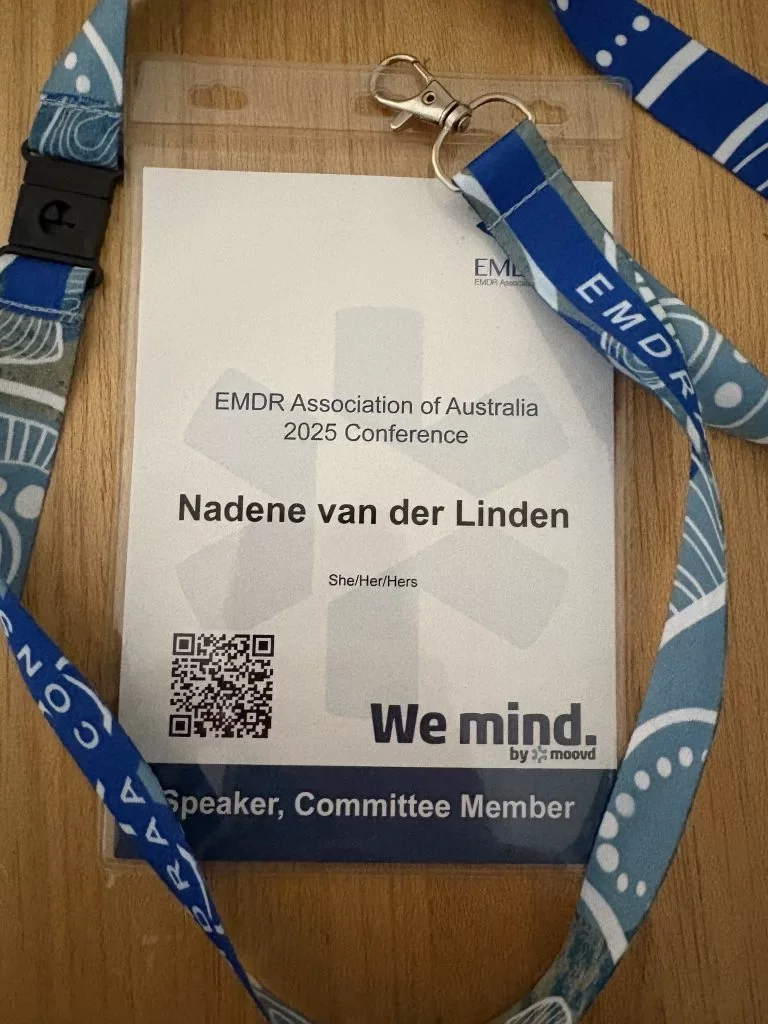
Handling Conference Stress with Confidence
Conferences are a great place for therapists to network, show case their skills and stay up to date with research. They are also a prime time to have your schema patterns fire up.

Sell More, Stress Less: Online Offer Tips for Therapists
One of the common struggles for therapists who want to develop additional income streams is confusion about what to offer. No one wants to create an offer that doesn’t sell. Here’s what worked for me.

Frustrated by Marketing That Doesn’t Work? Read This
When you put marketing out there and it doesn’t convert into clients and customers, it’s super frustrating.

Things I’m Not Doing in 2025 to Take My Business to the Next Level
Things I’m not doing in 2025 to take my business to the next level (based on strategy coaches have tried to sell me in 2024).

Thrive
with Nadene!
Follow Nadene on Instagram